
Full Flake Polyaspartic
Our flagship system: an advanced polyaspartic base and topcoat with full vinyl-flake broadcast. UV-stable, flexible, and built to outlast the house.

What it is
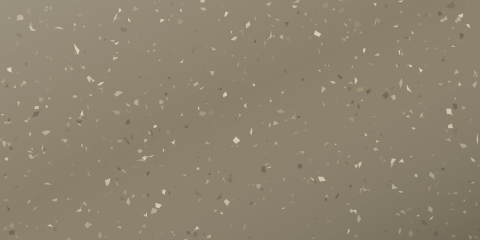
The full flake polyaspartic system is what most homeowners picture when they think of a modern garage floor: a seamless, granite-look surface with color chips broadcast to full rejection, locked under a crystal-clear protective topcoat. Polyaspartic is the newer generation of floor coating chemistry — it cures far faster than traditional epoxy, stays flexible enough to move with your slab, and is 100% UV-stable, so it will never yellow in sunlight.
None of that changes how we build the floor: full diamond grinding, moisture testing, and crack repair before any coating goes down, and every coat given the cure window the manufacturer specifies. Advanced chemistry is a material property, not an excuse to rush — the coats still go down in the right order, at the right thickness, with the right time in between.
The full broadcast of vinyl flake does more than look good. It adds texture for slip resistance, hides dust and tire marks between cleanings, and builds thickness that shrugs off dropped tools, hot tires, road salt, oil, and gas.
Where it's best
- Garage floors that take real abuse — tools, jacks, hot tires
- Patios, lanais, walkways, and pool decks (UV-stable — no yellowing)
- Homeowners who want the classic speckled "showroom garage" look
- Slabs in climates with big temperature swings — polyaspartic stays flexible
How we install it
Full Flake Polyaspartic goes down in four stages, always in this order, and each one gets the cure time the manufacturer specifies rather than the time a schedule would prefer. Compressing or skipping a stage is the single most common reason a coating fails early, so the sequence below is the job — not a summary of it.
-
Diamond grinding
We mechanically grind the entire slab with diamond tooling to open the pores of the concrete — never acid etching. Cracks and spalls are cut out and repaired with polymer-modified filler.
-
Polyaspartic base coat
A pigmented polyaspartic base coat is squeegeed and rolled into the profiled concrete, wetting into the pores for a mechanical and chemical bond.
-
Full flake broadcast
While the base coat is wet we throw vinyl flake "to rejection" — until the floor cannot hold any more — for complete, even coverage with no bald spots.
-
Scrape and clear topcoat
Once the base sets, we scrape and vacuum loose flake, then lock everything under a high-solids clear polyaspartic topcoat with the slip-resistance level you choose.
Frequently asked questions
How soon can I park on it?
Is polyaspartic really better than epoxy?
Will hot tires peel it?
How do I clean it?
Other systems


Want Full Flake Polyaspartic on your floor?
Get a free, no-pressure quote — send a couple of photos and we'll tell you exactly what your slab needs.